The wood lexicon
by Ennobled

The wood lexicon
by Ennobled

The quality of the wood is an essential factor.

From furniture panelling and decking to wooden facades, wall cladding and formwork in interior and exterior areas. By using high-quality wood, you can prevent structural damage and increase the durability of your facade, for example. The wood quality also provides information about which wood is suitable for which areas of application.

The wood quality –
How do you recognise
good wood?

The quality of the wood determines the finished product

Wood quality is also relevant for carbonised wood: The more suitable the starting material, the more resistant the wood surface will be after traditional carbonisation with yakisugi.

In order to be able to assess and compare the quality of woods, they are categorised according to certain criteria during the wood grading process. Below you will find an overview of the most important assessment criteria and suitability classes for wood quality.

Quality

How is a
tree constructed?

In order to determine the quality of the wood, you should first take a closer look at the structure of a tree.

A tree consists not only of many growth rings, but also of different zones, each of which fulfils different functions. Under the bark, the wood can be divided into sapwood and heartwood.

The difference between sapwood and heartwood

The heartwood is the inner area of the tree. Depending on the type of wood, this zone can vary in width. In general, the heartwood is harder, darker, drier and more stable than the sapwood. Due to its hardness, resilience, durability and dryness, it is particularly suitable for furniture making and also for a wide variety of outdoor wooden objects.

Sapwood, on the other hand, describes the outer layer of the tree through which nutrients and water are transported or stored. It is lighter in colour, softer and less resistant than the heartwood. If it is used outdoors, it requires additional protection, e.g. with chemical wood preservatives.

Which wood characteristics
influence the properties
and thus the quality of wood?

There are many different factors that influence the properties of wood

These so-called wood characteristics are particularly interesting for construction projects because they have a major influence on building-specific properties such as the resistance or dimensional stability of wood.

The following wood characteristics, among others, have an influence on wood quality:

Knottiness | resin pockets | wood moisture | annual ring width | twisted growth | curvature | debarking | rot | insect infestation | cracks

The ideal values of these factors also depend on the area of use of the wood: In heated indoor areas, for example, the ideal wood moisture content is slightly lower than on an external facade.

Wood characteristics: The knottiness

Knots change the uniform structure of the wood and therefore also its properties such as shape and colour. They can also be used as a design element for furniture or facades, as they lend the wood exciting lines due to their dark-coloured edges. However, as the number and size of knots increases, the bending and tensile strength of construction timber also deteriorates.

Knots are therefore generally undesirable, whereas knot-free timber guarantees greater strength and therefore better timber quality.

Wood characteristics: Resin pockets

In nature, the resin in many conifers such as spruce or pine acts as natural protection. If cracks appear in the tree bark, the tree produces resin to seal the damage in a natural way.

However, resin deposits reduce the stability of wood as a building material and also make it more difficult to work the surface of the wood, which is a disadvantage for the usability of the wood.

We apply strict quality criteria when sourcing our timber!

Wood characteristics: Wood moisture

When it comes to interior and especially exterior timber constructions, wood moisture is an extremely important criterion for determining timber quality.

Freshly felled wood has a water content of around 50% or more – depending on the type of wood, location and age of the tree. Ideal construction timber, on the other hand, should have a maximum moisture content of 20% – depending on the area of application. This is referred to as “equilibrium moisture content”: the wood should have the same moisture content as the surrounding air.

The equilibrium moisture content of wood differs indoors and outdoors

  • for heated buildings and indoor living spaces: approx. 6-12%
  • for open, roofed structures: approx. 13-18%
  • for outdoor structures and facades exposed to the weather: approx. 15-20%

The timber must therefore be dried before it can be used as construction timber! The drier the wood is, the more resistant it is to water retention and the more difficult it is for wood-destroying fungi to colonise.

Wood characteristics: Annual ring width

Growth rings are the circular grains of a tree trunk. Each growth ring represents one year of growth of the tree (hence the term “growth ring”).

A growth ring consists of a lighter-coloured layer, the early wood, and a darker layer, the late wood. In spring, summer and autumn, native trees usually grow faster due to the weather conditions. The cells of the early wood are therefore relatively thin and have less strength. In winter – towards the end of the growing season – the tree grows more slowly due to the low supply of nutrients and the cell walls store certain wood constituents. As a result, the wood cells of the late wood are denser and firmer, giving the wood stability.

The exact appearance of the growth rings can vary depending on the type of wood and vegetation climate. The width, thickness and nature of the growth rings greatly influence the strength properties of the wood.


Order accessories and spare parts easily online.

You can easily order the right accessories for installing and maintaining our wood from our online shop.

Go to shop

How to determine the wood quality

Durability class, quality class, service class, utilisation class

The following four classifications have proved particularly useful for determining the quality and various properties of wood: The durability classes, the quality classes, the service classes and the utilisation classes.

Criterias

At a glance: the
quality classes

Quality class 1: The durability class

The so-called durability classes (formerly known as “resistance classes”) were developed in order to assess the durability of wood and to be able to compare it more easily. They describe the resistance of the wood to wood-destroying organisms.

The resistance, durability and longevity of different types of wood are divided into 5 different categories. The number 1 means “very durable”, i.e. very resistant to wood-destroying fungi, the number 5 describes the lowest durability.

Tropical woods such as Bangkirai, Cumaru and Garapa or teak are among the most durable woods in classes 1-2. Thanks to their hardness and natural ingredients, these woods are extremely durable and weather-resistant by nature.

In contrast, many domestic woods such as larch, fir, spruce, beech and ash are softer and less resistant to external influences. These types of wood have a natural durability of 3-5.

1 – very durable         2 – durable         3 – moderately durable         4 – not very durable         5 – not durable

Quality class 2: The quality classes

The quality class generally describes the wood quality.

The decisive factors here are diameter, length and wood characteristics such as knots, resin pockets, twisted growth, curvature, rot or cracks. Depending on the number, type and severity of these characteristics, the wood is categorised into quality classes A, B, C, CX or BR.

A: Value timber – Above-average to excellent quality, mostly knot-free, hardly any or no defects at all

B: Average to above-average quality – Slight defects that do not impair the quality of the wood. A small number of knots are permitted

C: Average to below average quality

CX: Lower quality – The wood is suitable for cutting in the sawmill, but has major defects in terms of various wood characteristics

BR: Brown wood – wood with nail-resistant brown rot, used for fibre and energy wood

Quality class 3: The utilisation classes

Formerly known as “hazard classes”, the usage classes describe the risk to the wood from possible insect and fungal infestation and therefore the requirements for the selected type of wood or the use of chemical wood preservatives.

The conditions of use depend on the respective area of use of the wood and are classified from 1 (indoor use) to 5 (salt water). In Germany, there is an additional usage class 0.

0: very low risk in dry interior areas, insect-proof covering – no chemical wood protection required

1: low risk in dry indoor areas, insects have access – wood protection against insects only in exceptional cases

2: Wood without ground contact and without weather influences (e.g. in protected/under-roof outdoor areas) – wood protection against insects, fungi

3/3.1/3.2: Wood in outdoor areas without constant contact with soil or water. Accumulation of water in the wood is possible – wood preservative against insects, fungi; fixation (protection against leaching)

4: Wood in permanent contact with soil or water – wood preservative against insects, fungi, mould rot, fixation (protection against leaching)

5: Wood is permanently in salt water – wood protection against insects, fungi, mould rot, fixation (protection against leaching)

Quality class 4: The usage classes

With the help of the usage classes from 1-3, the building planner can assign the strength characteristics of the wood and assess how the wood deforms under certain environmental and climatic conditions. The usage class describes the areas of application in which the timber can be used.

1: Closed and heated structures on all sides

2: Roofed, open structures

3: Structures exposed to the weather in outdoor areas


Order your desired wood samples here

Deep Charred Wood.
Understand, see, feel and experience.

We will be happy to make your decision easier and send you our wood samples free of charge for a preview!

Order free samples

Still not sure which wood is right for your project?

Send us your key data and we will advise you! With the professional support of our timber experts, you are sure to find the right product for your building project.

Request consultation

Optimising wood properties
with the help of wood modification

Durability and resistance thanks to modification

With the help of chemical or thermal interventions, it is possible to change and optimise the properties of wood!

This means that even domestic, originally less durable woods can be made more resistant and durable. Kebony® and Accoya® are among the most popular modified woods.

Carbonisation improves the resistance of the wood

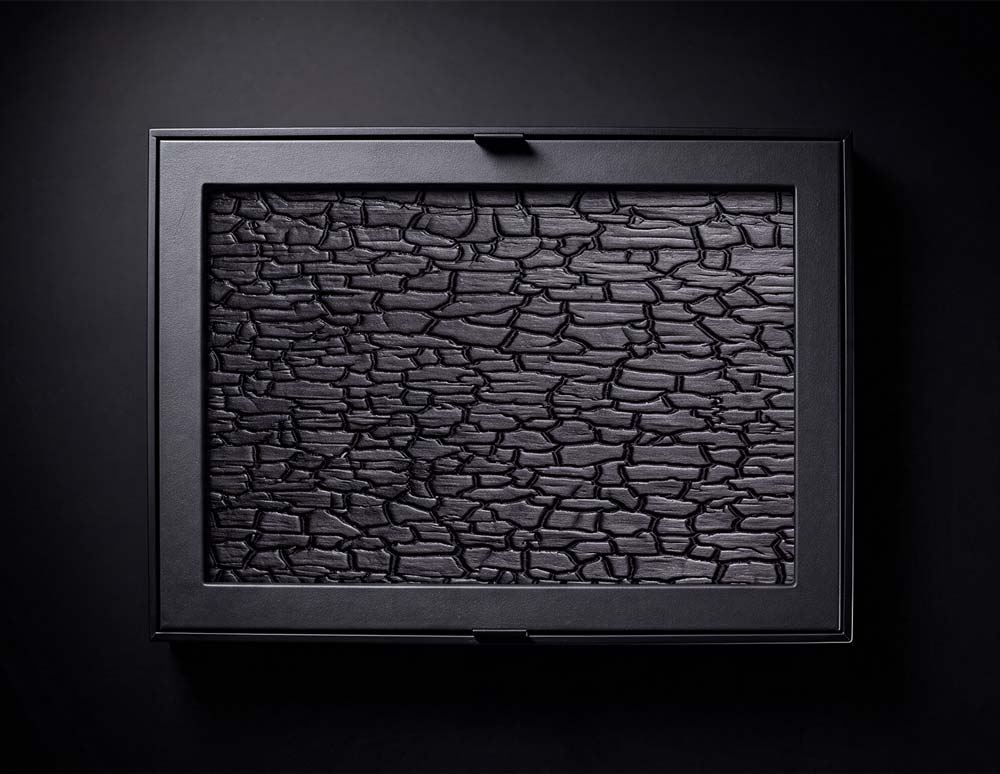
Our sustainable deep-charring using the traditional Yakisugi method gives the wood high durability and resistance – completely without fossil fuels and chemicals. The surface is carbonised with a pure flame, which compacts the wood cells.

Due to the long durability and resistance of Deep Charred Wood, there is no need for post-treatment with chemical wood preservatives, which is why wood finished with Yakisugi is considered environmentally friendly and sustainable.

A positive side effect: carbonisation creates a unique, characteristic surface structure of the wood.