Spruce nature

Spruce nature

Durable and easy-care wood for outdoor use

As a sustainable and durable natural wood, spruce impresses with its versatility!

Its fine and even grain adds a touch of sophistication to any building facade, while the light, even-toned appearance of spruce wood gives a feeling of elegance and simplicity.

Exciting design options and long durability

Natural spruce: a popular wood for a wide range of applications

Spruce is versatile, a popular all-rounder and impresses outdoors as an attractive, beautiful design element.

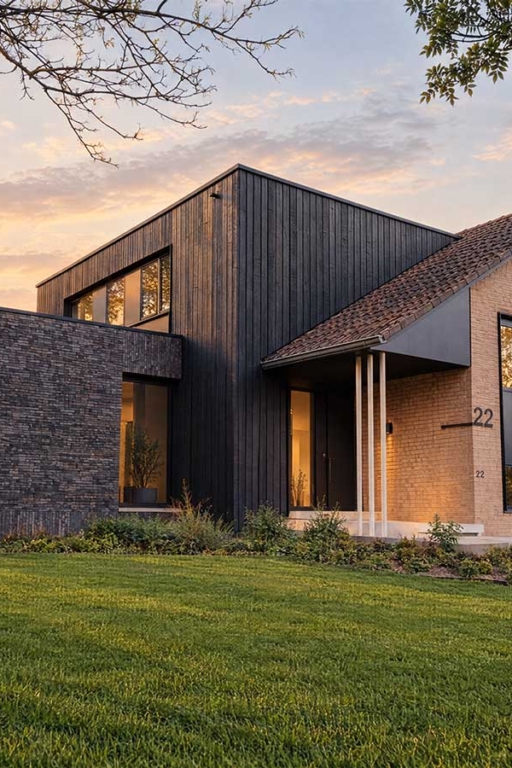
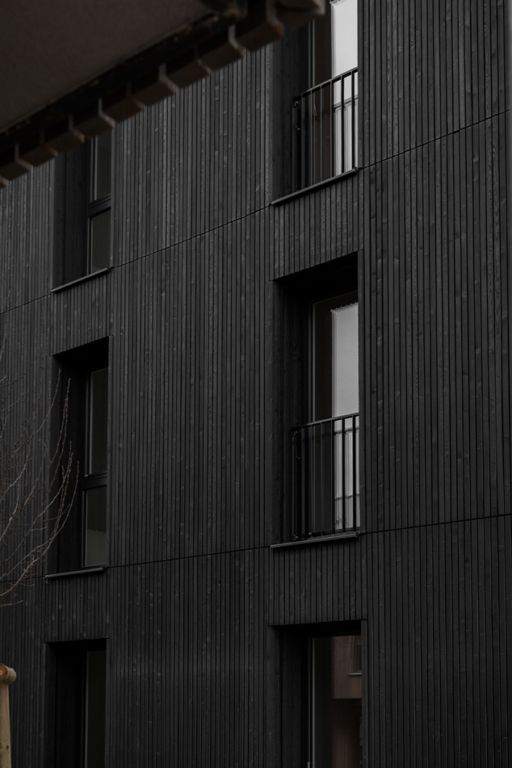
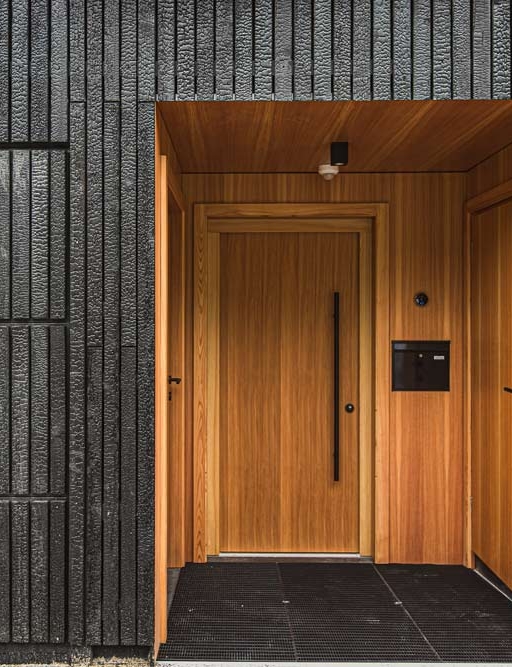
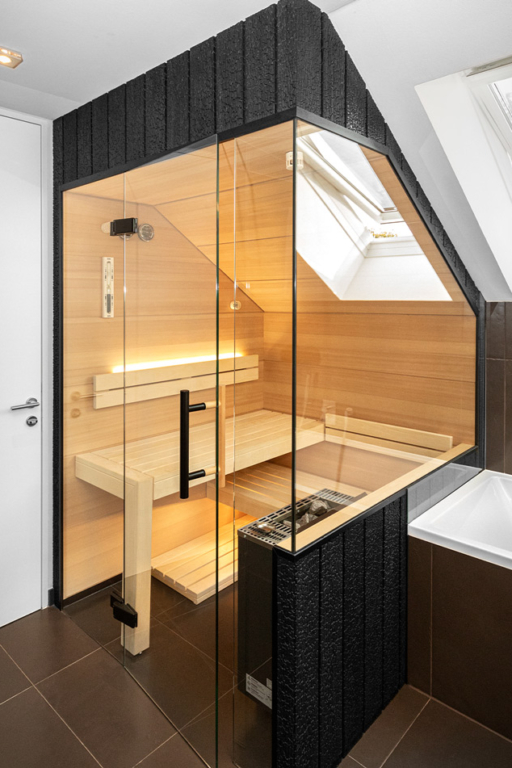
Indoors, spruce wood is often used for load-bearing walls and ceilings, flooring, wood paneling, furniture and various other purposes. Outdoors, the wood can be used for façade cladding, windows, doors, fences and gates.

Area of application

Outdoor Indoor
Spruce

Natural spruce wood:
Properties, appearance and areas of application

Special characteristics of spruce

Spruce is a very important wood supplier in many European countries!

Its wood is light, soft, elastic, load-bearing and easy to work. The average shrinkage and swelling values result in relatively good stability.

Spruce wood is therefore the most frequently used building and construction timber in building construction and civil engineering and is generally very versatile, for example as a raw material for energy production.

Popular areas of use for spruce

Indoors, spruce wood is often used for load-bearing walls and ceilings, flooring, wood paneling, furniture and various other purposes. Outdoors, the wood can be used for façade cladding, windows, doors, fences and gates.

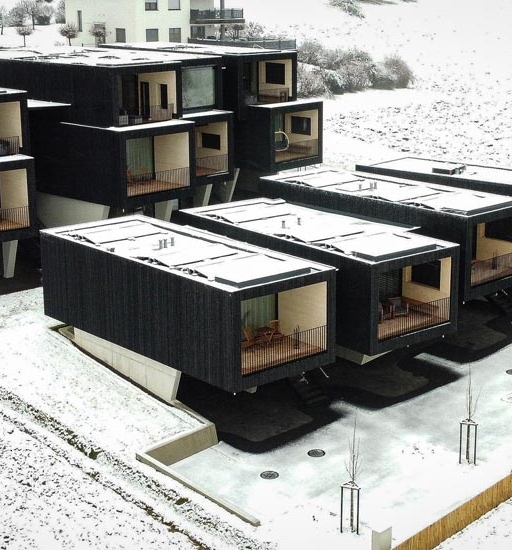
Tip: Untreated spruce wood can also be combined well with carbonized or refined woods!

Wood procurement by Ennobled: Spruce wood from Scandinavia

We source our PEFC and FSC-certified spruce wood from Europe, mainly from forests in Scandinavia.

Our Nordic spruce wood is of a higher quality because it grows in harsh climatic conditions and is therefore more resistant. It has a particularly fine grain and is therefore ideal for processing with our traditional deep-charring process and for our careful hand-finishing.

When procuring wood at the sawmill, we select suitable timber according to strict quality criteria. We use a special sorting process that helps us to filter out the knot-free, high-quality wood planks and ultimately obtain the typical, beautifully textured wood surface of our carbonized and refined woods!

After sorting in the Austrian sawmill, our spruce wood is also dried for several weeks and then planed by hand in our wood factory and subjected to detailed profile processing in order to prepare it optimally for deep charring.

Local spruce wood: species, origin and growing areas

All about the origin and occurrence of spruce

The Norway spruce (Latin: Picea abies, English: Spruce) is mainly native to Europe and comes from the spruce genus (Picea).

Due to its striking bark colouring, the Norway spruce is sometimes referred to as red spruce or incorrectly as Norway spruce. It is also nicknamed the “bread tree of the forestry industry”, as it is widespread in many European countries and also in parts of Asia and therefore plays a major economic role.

The Norway spruce naturally occurs in colder to temperate climate zones, e.g. in the Nordic coniferous forests of Scandinavia or in the mountainous region of the Alps. This is why it is also known as Nordic spruce.

Thanks to its good wood quality and, above all, its rapid growth, it is of great importance in forestry, which is why spruce is also cultivated on a large scale in other areas. There, too, it grows quickly, but in regions outside its growing area it is more susceptible to pests, droughts and storms.

Description, habitat and characteristics

As an evergreen conifer, the native spruce grows upright, can reach a height of up to 50 metres and a trunk diameter of up to 2 metres and can live for several hundred years.

Its sapwood and heartwood are yellowish white and almost indistinguishable in colour. The spruce is generally an adaptable tree with low nutrient requirements. It grows in partial shade and is only relatively demanding in terms of water supply: the soil must remain well aerated for the common spruce to grow healthily.

The growing conditions of the spruce

Its root formation also depends heavily on soil aeration. In its natural growth areas, the spruce finds well-aerated soils, where its roots can reach deep into the earth.

In heavy, poorly aerated soils with a lot of waterlogging and a high groundwater table, on the other hand, it forms a relatively shallow, plate-shaped root system. In these regions, it is more susceptible to windthrow and can be more easily toppled or uprooted in storms.

Nordic spruce is of very good quality and strength

The wood quality of spruce also depends heavily on the climatic growing conditions. If the tree is supplied with water, nutrients and warmth for a long time, a relatively wide early wood layer develops, which tends to be soft and vulnerable.

As winters in Scandinavia tend to be long, dark and windy, Nordic spruce grows there under harsh climatic conditions. This allows relatively more latewood to form and the spruce wood becomes harder, stronger and more resistant under these weather conditions. In addition, Nordic spruce is very elastic and does not splinter as quickly when exposed to wind.

Did you know? The oldest tree in the world is a spruce! It is located in Sweden and is estimated to be an incredible 10,000 years old – a true survivor!

The blossom of the spruce

The spruce flowers between May and June – usually about 3-4 years apart. The male flowers are somewhat smaller than the female cones, which change colour from a fresh red-green to an earthy brown in the course of the year.

After ripening, the spruce sheds its cones. There is a widespread misconception that these spruce cones are often referred to as fir cones, but this is not true: fir trees do not shed their cones as a whole!

The spruce – a fast-growing tree with high carbon dioxide uptake

The Norway spruce grows very quickly and absorbs a lot of carbon dioxide compared to other trees. These properties make it a sought-after tree in forestry.

During the cold season, the spruce goes into hibernation and photosynthesis ceases. It prepares itself for the winter by accumulating sugar: During the cold season, it has particularly good frost resistance and can withstand temperatures down to -60°C!


Our top woods from our product range at a glance.

Carbonised woods

Charred black, three-dimensional look, strong character structure

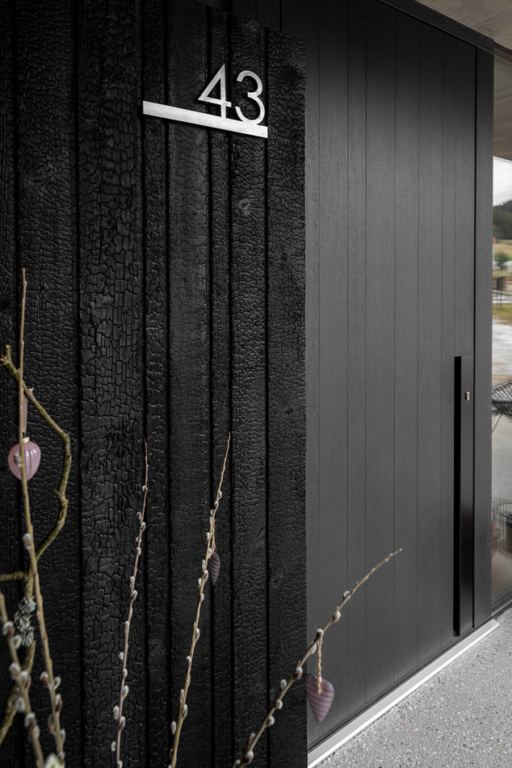
Using our traditional, vertical deep-charring process, our woods are carbonised with pure flame according to the Japanese Yakisugi method, resulting in extremely resistant, durable wood products with a unique, black charred surface structure which, thanks to its exclusive character, is also compared to alligator skin, silk wood or leather.

View all carbonised woods

Refined woods

Traditionally carbonised, brushed and carefully finished by hand.

If you opt for the refined style, the already carbonised wood is then carefully brushed by hand and refined using a special process so that the grain and structure are revealed under the layer of carbon. Depending on the processing and type of wood, our wood finishing creates an exclusive colour look: from elegant silver-grey to an ingenious reclaimed wood look in rustic brown tones.

View all refined woods

Even more inspiration – more projects to marvel at

To project page