Local larch nature

Local larch nature

Natural, high-quality wood from
Austrian forestry

As a sustainable and stable hardwood, native larch impresses with its versatility!

It scores points with its good load-bearing capacity, high dimensional stability and its hard, resistant surface in beautiful, natural colours.

Top technical and aesthetic features

The local larch nature:
the price-performance favourite

Thanks to its unbeatable price-performance ratio, domestic larch is one of our top sellers.

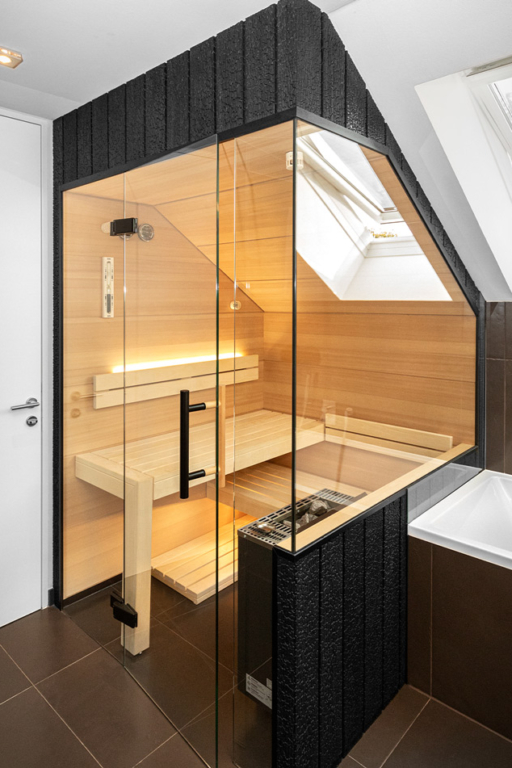
Its good technical and aesthetic properties make it a popular wood for natural facades outdoors as well as for wall panelling, flooring, furniture or a bright, friendly interior.

Area of application

Outdoor Indoor
Larch

Local larch wood:
Properties, appearance and areas of application

Use of the local larch wood

The local larch wood is the heaviest and hardest of the European softwoods, which is why it is used as a versatile building and construction timber for a wide variety of purposes.

From furniture construction to wall and ceiling constructions, interior wood panelling to fences and exterior cladding.

Thanks to the good properties of European larch wood, it offers numerous advantages for use: It scores points with its high load-bearing capacity, good weather resistance and its naturally beautiful, decorative appearance with an attractive reddish-brown colour.

The larch under the natural influence of the weather

Under the influence of rain, wind and weather, the reddish-brown larch wood greys over time and its patina takes on a beautiful silver colour.

This transformation takes place very slowly and holistically and creates a beautiful, natural look, designed by nature.

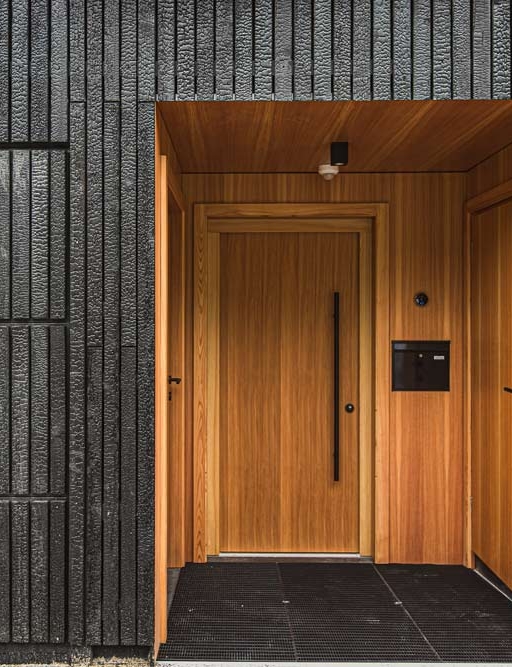
Tip: The untreated larch wood can also be combined well with carbonised or refined woods!

Wood procurement at Ennobled: Larch wood from Austria

We source our PEFC-certified, local larch wood exclusively from Austria!

In the Alpine region, the larch finds optimal climatic conditions for natural and sustainable growth. When procuring timber at the sawmill, we select the wood that is ideal for our traditional deep charring according to strict quality criteria.

We use a special sorting process that helps us to filter out the best possible knot-free and high-quality wooden boards and ultimately obtain the typical, beautifully textured wood surface of our carbonised and refined woods!

After sorting in the Austrian sawmill, our larch wood is also dried for several weeks and then planed by hand in our wood factory and subjected to detailed profile processing in order to optimally prepare it for deep charring.

Local larch wood: wood species, origin and growing areas

Occurrence of the local larch

The European larch (Latin: Larix decidua, English: European Larch) comes from the larch genus, which in turn belongs to the pine family.

As the name suggests, it is mainly local to Europe. There it is mainly found in the Alps, the High Tatras (highest part of the Carpathian National Park in Slovakia and Poland), the Sudetes (mountain range in Germany, the Czech Republic and Poland) and the Polish lowlands.

As the larch is very light-requiring, it grows naturally mostly in higher, alpine regions and on light-permitting steep slopes with a sub-continental climate.

Characteristics of European larch wood

However, due to its great economic importance for furniture and timber construction, it is also cultivated outside its native range in warmer regions.

The local larch grows straight upwards, can reach a height of up to 54 metres and a trunk diameter of up to two metres, and can live for several hundred years.

The larch is the only deciduous, winter-bare conifer: like the leaves of a deciduous tree, the needles turn yellowish in autumn and fall off before winter. This means that the larch requires less water and is better protected against frost damage in dry winters.

Description, habitat and characteristics

A special characteristic of the European larch is its frost hardiness and its resistance to both low temperatures of up to -40 °C and summer heat. It requires relatively little water and nutrients, which is particularly advantageous for colonisation in dry, colder mountain regions.

The heartwood of the larch differs greatly from the lighter sapwood due to its higher density and darker, reddish to orange-brown colouring. As the larch becomes heartwood after just a few years, the proportion of denser, harder and more stable heartwood is greater than the proportion of sapwood.

Natural durability of local larch

The natural durability of local larch against wood-destroying fungi can vary between individual trees, as it depends heavily on climatic influences, growing conditions and the proportion of latewood. On average, however, untreated larch has a durability rating of 3-4.


Our top woods from our product range at a glance.

Carbonised woods

Charred black, three-dimensional look, strong character structure

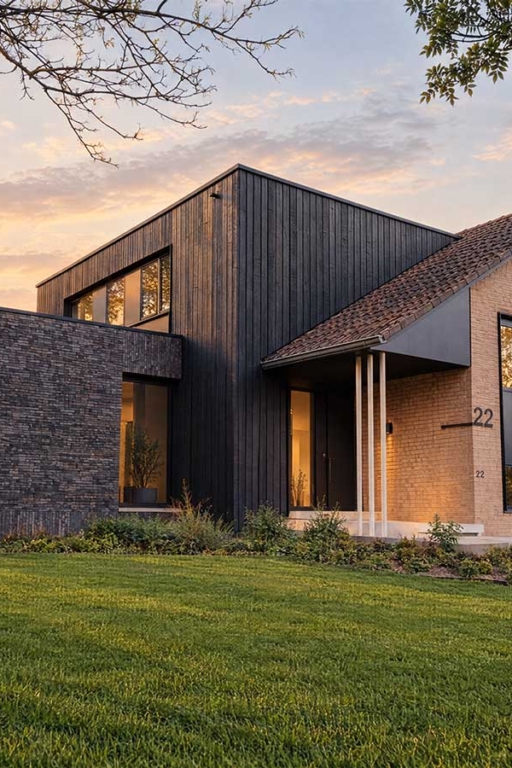
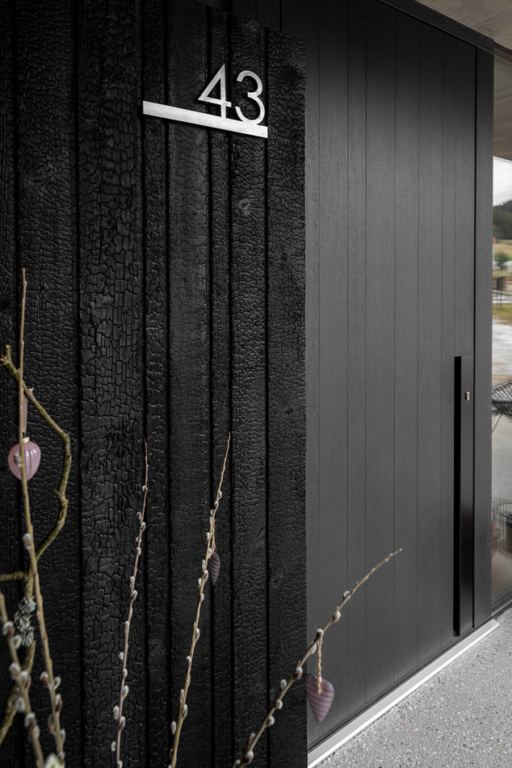
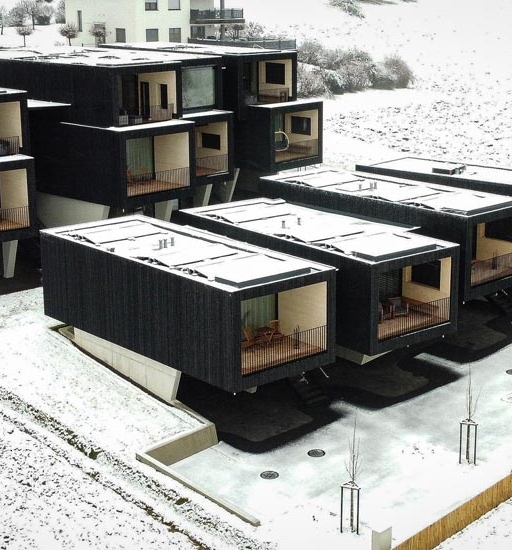
Using our traditional, vertical deep-charring process, our woods are carbonised with pure flame according to the Japanese Yakisugi method, resulting in extremely resistant, durable wood products with a unique, black charred surface structure which, thanks to its exclusive character, is also compared to alligator skin, silk wood or leather.

View all carbonised woods

Refined woods

Traditionally carbonised, brushed and carefully finished by hand.

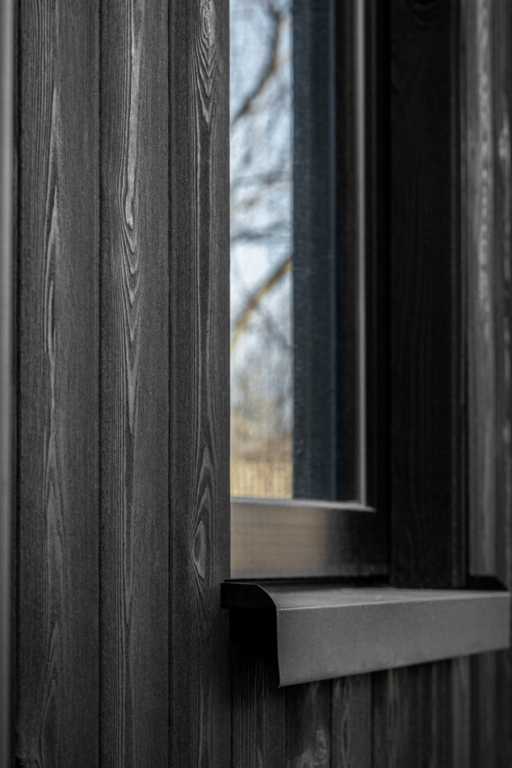
If you opt for the refined style, the already carbonised wood is then carefully brushed by hand and refined using a special process so that the grain and structure are revealed under the layer of carbon. Depending on the processing and type of wood, our wood finishing creates an exclusive colour look: from elegant silver-grey to an ingenious reclaimed wood look in rustic brown tones.

View all refined woods

Even more inspiration – more projects to marvel at

To project page